
Acrylic paint is a great go-to for many beginner artists, but unlike watercolor or oil-based mediums, certain techniques should be implemented if you want to hone your skills in acrylic painting.

The Pros:
Acrylic paint is the most versatile paint because it can be used over wood, glass, brick, fabric, paper mâché, leather, or any non-greasy surface.
The Cons:
The most common flaw in using acrylic paint is that has a fast-drying time, which can ruin your project and some of your paintbrushes as well.
So, in this blog, I will address some common solutions to problems beginner artists may face when dealing with acrylic paint.
Acrylic paint does not mix well with other mediums.
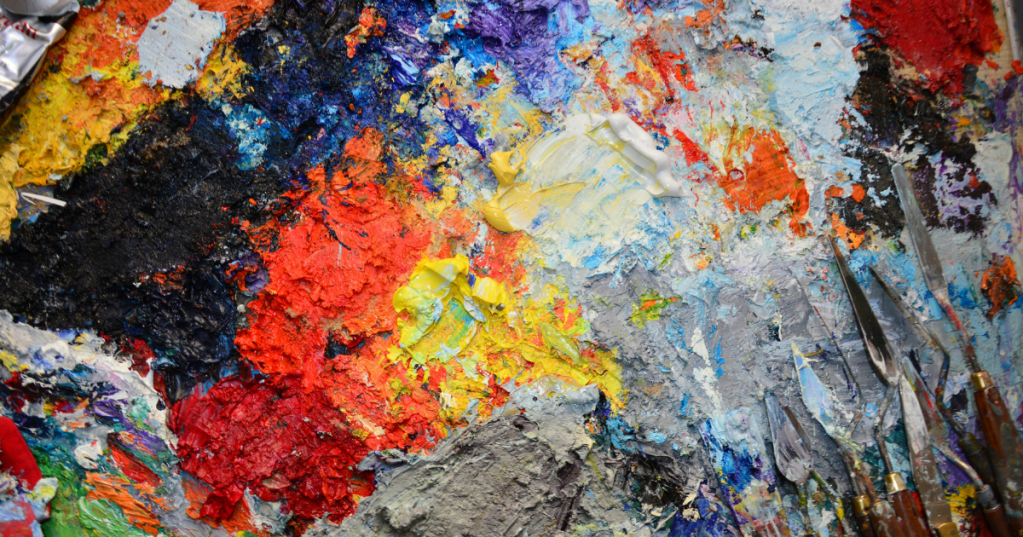
This is true. Acrylic paint does tend to be difficult to use when blending oil or watercolor-based material. The reason for this is that Acrylics can dry in minutes as opposed to oils which can take days or even months.
Solution
You may want to try to underglaze your project. Under glazing is a simple technique where you lay down the foundation of your painting such as the background in acrylic but add the upper layer of paint with oil paint or watercolor.
Acrylic paint dulls & color shifts as it dries. This makes the painting to appear darker.

If you begin a project using solely acrylic paint, the light reflecting off the room and windows will often at times give your painting a glossy look. Unfortunately, after the painting is set, the moisture dries up and it tends to dim the saturation and vibrance of the color in your painting. This is obviously something you don’t want.
Solution
A simple solution is to add a gloss varnish to your finished piece. I like to use a flat-head paintbrush to coat over the canvas.
A common brand that is commonly sold in Walmart or your local art store is Liquitex and Angelus. They work very well.
Acrylic paint will ruin the bristles in your paintbrushes.

This can be very true. If you leave your paintbrushes out to dry, it is almost impossible to comb or wash out material and reuse them again.
So what do you do if this happens to you?
Throw it out and go to the store and buy another set.
Sorry.
Solution
I recommend you place a cup full of water near your workstation and set your paintbrush inside the cup when you are not painting. I also recommend a disposable cloth to use to wipe off the residue when you plan to paint again with the brush.
Bonus tip:
Wipe your palette every 5 to 10 minutes with a damp rag to prevent the acrylic from drying.
Acrylic paint tends to dry fast.

This is a common problem for most beginners. I have learned that if the paint’s viscosity is thick, it tends to dry very fast (between 10 – 15 minutes).
Here are some quick guidelines:
Paint with thick viscosity – 10-15 minutes
Paint with moderate viscosity – 16 – 25 minutes
Paint with light viscosity – up to 30 minutes
Solution
It starts with purchasing a good brand such as Winsor & Newton or Black Studio.
But what if you’re on a budget?
You can try this simple trick: blend your paint with water. Water will loosen the viscosity of the paint, and this will stretch out the length in its drying time.
Acrylic paint can be expensive.

This is not true. A good pair of tubes can start from $5 to 15 dollars. If you are starting out on your first project, there are cheaper options you can buy for as little as $3.
Solution
I shop at the local art store, but if an art store is not located near you I jotted down 5 online art stores you may want to shop.
- Michaels
- Joann
- Target
- Home Depot
- Walmart
- Amazon.com
Using Acrylic paint takes time to master.
Even though there is some bit of truth in this statement, I would not be discouraged because if you are a fan of creating art. You will find a way to see what works best for you.
Art is subjective and there is no set right or wrong way to create anything. However, there is troubleshooting in anything, so here is a technique I would use to cut time in painting with acrylics.
Solution
- Start with a sketchbook.
- Sketchbook out your ideas until you complete your finished idea.
- Translate your idea to an Illustration board.
- Sketch out your dimensions.
- Foreground
- Background
- Use a pencil to draw out the main and supporting subjects.
- Start with the eyes, nose, mouth and the shape of the face.
- Add the contours of the body.
- Finally, add the shadows surrounding the subject.
- Add the paint to fill in the picture.
- Mix your colors.
- Now, paint!
Please Note: I typically reverse the process when I paint in watercolor. I start with the background and shadows. Acrylic paint dries fast so I would recommend detailing the primary objects first and working to the lesser details last.
I hope this blog has provided some insight into working with acrylic painting. OF course, everything starts with the 3 P’s: Practice, Persistence & Patience, but hopefully this blog will set you on the right track.
So start creating now!



 A Shade of Art
Leave a comment